Relational Ecology and Climate Justice: The Bayan and Environmental Democracy
By Arfi Hidayat
Indigenous animisms in the Bayan region provide a great example of relational ethic. This ethic matches up with Kyle Whyte’s understanding of how Traditional Ecological Knowledge (TEK) might be used to address issues of climate change. First, TEK must be understood as a collaborative concept; second, the climate crisis is an intensification of colonialism for Indigenous and local peoples; and third, the measure of environmental justice should use a framework of collective continuance, which is the collective capacity to adapt without sacrificing self-determination.
In the literature, TEK is often treated as a repository of information that can be drawn upon to “complement science.” Whyte criticizes this approach and proposes TEK as a collaborative concept: an invitation to build a long-term process that enables mutual learning about the meaning of “knowledge” and how knowledge relates to environmental management goals. The implication is clear: rather than instrumentally “integrating TEK into science,” we must establish processes for community voice, shared governance, and ethical protocols for knowledge exchange to avoid falling into epistemic extractivism.
What Whyte criticizes resonates with my experience of traditional knowledge practices in Bayan, such as: selametan subak (respect for water), membangar (traditional technology for managing land), bonga padi (rice management), perumbaq lauq/daya (traditional institutions that protect the sea and forests), and respectfulness to ina-ina (the best rice seeds that symbolize birth and the giver of power). All of these are carried out in a way that embodies a spirit of relational responsibility involving approval procedures, deliberation (gundem), and restorative sanctions (awiq-awiq/customary rules).
Whyte also argues that for Indigenous peoples, climate change is not just a new ecological threat, but a repetition of the accelerated changes that were once produced by colonialism, capitalism, and industrialization: from forced relocation to the destruction of Indigenous diplomacy. Therefore, the narrative of the “Anthropocene” that levels the responsibility at all “humans,” actually obscures historical and political inequalities. Part of the solution to climate change, then, is restoring autonomy and self-governance to Indigenous and local peoples.
For the Bayan People, the logic of renewing relations to human and non-human relatives offers a vision of environmental democracy. This practice is evident in their cosmology, which I refer to as the cosmology of tawhid that views Mount Rinjani as inen paer (the center of energy/power/cosmos) and rivers as “arteries” that nourish the plains. The practices of penjambeq gunung (a ritual performed by climbers to seek divine blessing while affirming ecological balance), ngasuh gunung (a restorative ritual enacted after disasters or disturbances to repair the mountain’s spiritual-ecological equilibrium), and nyeran (a triennial customary expedition in the inner forest to monitor wildlife and transmit intergenerational ecological knowledge) maintain the dignity of the region when disturbances occur. In addition, their time is marked by the wariga, a customary lunar calendrical system used to read macrocosmic signs and determine auspicious times for planting, aligning human cultivation with cosmic rhythms. Finally, they have a period of time that gives the fields the right to “breathe” after harvest in order to restore the rhythm of the cosmos. When bureaucratic conservation closes access or criminalizes customary practices, the capacity for adaptation based on relationships, including women’s knowledge of seeds, food, and domestic energy, becomes almost impossible.
Instead of bureaucratic conservation, Whyte suggests what he calls a normative metric of collective continuance, which is the collective capacity of a community to adapt to change while avoiding preventable losses. This capacity rests on four qualities of relationships: trust, consent, diplomacy, and redundancy. According to Whyte, what he calls “settler colonialism” works by undermining these four qualities. Its patterns of violence manifest in two main forms: vicious sedimentation, namely the sedimentation of landscapes and settler rules that normalize invisibility and eliminate the need for customary consent; and insidious feedback loops of extractive industries that exacerbate the climate crisis, trigger relocation as well as gender-based violence. International and national government policies that seek to address climate change based on generic management ideas flowing from the concept of “The Anthropocene,” ignore these more local, relational approaches, and participate in a form of green colonialism.
The Bayan context illustrates this. The establishment of national parks and state domain regimes has closed off community access to customary forests and rice fields, delayed formal recognition by the Indonesian government of local rights, and obscured the legitimacy of local religious rituals. As a result, the four components of these healthy relationships—trust in authority, consent to decisions, cross-institutional diplomacy, and diversity of resources that support sustainability—have slowly eroded. However, women’s efforts to save elas seeds (local sorghum) and restore the function of granaries demonstrate a form of epistemic resistance. Through these actions, they rebuild resilience while reclaiming knowledge authority from below.
If TEK is a collaborative concept, then its success is not measured by “how much Indigenous data is included in reports,” but rather by the design of the process: who defines the problem, what indicators are used, how benefits/risks are allocated, and what the ethical accountability mechanisms are. Within Whyte’s framework, renewing demands the restoration of relational processes as infrastructure for adaptation: language, rituals, institutions, and techniques that enable humans and more-than-humans to care for one another. In Bayan, this has already taken shape as evidenced by: the fact that leadership is shared (traditional positions require the presence of a spouse); the role of inen aiq (guardians of springs, a role that can be held by men or women as an ethic of “cooling/nurturing”); the deliberation procedures that measure sanctions according to kinship and economic conditions; and the architecture of inen bale and the placement of ina-ina seeds at the top of the granary as a “constitution” of sustainability.
Indigenous studies do not stand outside the politics of knowledge and justice; they are a relational technology that enables communities to survive, adapt, and determine their future direction. Following Whyte’s framework, TEK as a collaborative concept shifts the focus from content to process. Understanding climate change as an intensification of colonialism affirms the urgency of renewing relations to relatives, and making collective continuance a metric of justice directs attention to the quality of relationships that must be maintained. Organizing policy and research on a relational foundation is a better and more respectful way to contextualize Indigenous material than collecting them as objects, because it is a collaborative process that restores dignity, sustainability, and self-determination.
#
Arfi Hidayat is a Master’s candidate at the Center for Religious and Cross-cultural Studies (CRCS), Universitas Gadjah Mada, with a background in philosophy. His work repositions Indigenous communities from objects of study to subjects of knowledge production. He researches decolonial thought, Indigenous studies, environmental ethics, and the relationship between religion, ecology, and public life, with a particular focus on the Bayan Indigenous community of North Lombok and questions of epistemic justice and ecological ethics. He is currently developing research on Indigenous identity and epistemic justice in Indonesia..
Counterpoint blogs may be reprinted with the following acknowledgement: “This article was published by Counterpoint Navigating Knowledge on 18 February 2026.” The views and opinions expressed on this website, in its publications, and in comments made in response to the site and publications are those of the author(s) and do not necessarily reflect the views and opinions of Counterpoint: Navigating Knowledge, its founders, its staff, or any agent or institution affiliated with it, nor those of the institution(s) with which the author is affiliated. Counterpoint exists to promote vigorous debate within and across knowledge systems and therefore publishes a wide variety of views and opinions in the interests of open conversation and dialogue.
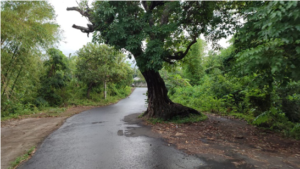
Photo credits: A tree left standing despite the construction of a road, illustrating the Bayan Indigenous community’s moral consideration ´toward trees. © Arfi Hidayat, 2024



0 Comments