Finnfaring! – Learning Through Relation
Medieval Norwegian laws prohibited a specific practice of Viking age Scandinavians, the finnfara. This was the practice of acquiring religious knowledge through “faring to the Finns,” meaning visiting the Sámi for knowledge exchange.
When you think about it, going to the Other for knowledge is not that strange a suggestion, and many Indigenous groups practice similar kinds of relation making. I personally know a Sámi shaman and an Inuit shaman who have both worked with Indigenous Amazonians in order to recover the cultural practice of shamanism. Also, the Brazilian Pataxó Indigenous group has largely adopted Afro-Brazilian spiritual technology as tool for their own decolonizing struggle. But can such a strategy be employed with integrity by people racialized as white? Is it possible in the historic aftermath of colonialism to “visit the Sámi” to learn from the Other, or are we irredeemably lost in whiteness, doomed to live in some sort of white-exceptionalist purgatory where relational learning is forever out of our grasp?
I have tried, so you can judge for yourself and decide if you want to cancel or canonize me. Though I’d prefer neither. My hope is that my story can bring up for cultural reflection an option for the possible decolonizing of Euro-descended people by focusing on deep-seeded levels of embodied coloniality and working toward the deconstruction of whiteness. This work has become the main focus of my communications on Nordic ancestral culture, which I communicate about online through the YouTube channel Nordic Animism.
I learned through finnfaring into an Afro-Brazilian religion whose ways of addressing other-than-humans and relational methodology has helped my little ritual group in Denmark reawaken contact with our own ancestrality, the Nordic polytheism, in a way that is now manifested through the Afro-Brazilian paradigm. Candomblé is an Afro-Brazilian religion of possession and initiation. It builds relation to a pantheon of sixteen deities called orisha or nkisi, depending on the modality. The modalities of Candomblé are called nations that relate to different origins in Africa. After doing a Candomblé ritual I had a dream that indicated the Nordic all-father deity, Odin, as my main deity-relation. This led to a process that culminated in my own initiation as a Candomblé-initiated possession priest of Odin as a nkisi-deity, meaning the kind of deity brought into relation by Ba-Kongo and their descendants in the Americas. Since then, in my ritual group we have come to practice a kind of Candomblé of the Nordic gods.
To many people, the very existence of this ‘Viking voodoo’ as an option on the burgeoning religious marketplace might seem rather weird. The reason is probably that we tend to think of relating to spirit worlds in terms of ‘religions’: systemically coherent complexes of thought, practice, belief, and cosmology, which you can subscribe to and install in your worldview, much like one might choose to install the Microsoft Office Pack to take care of your need for text, calculation, presentation, etc. But what if we try to think like Afro-Brazilians—or indeed like Vikings—and see our relation to spirit worlds mainly as relating to spirits, rather than as subscribing to a consistent system of thought and practice? Then much of what we call ‘religion’ would appear to be techniques for building and upholding such a relation. These relations would not necessarily align with identitarian/nationalist notions of cultural consistence, and we could (like the Brazilian Pataxó) approach something like Candomblé and learn ways of relating to spirit that dig below the modernist nationalist idea of culture and self-image that are so influential today.
From this perspective and practice, you would become, not necessarily particularly ‘European,’ ‘Nordic,’ ‘Danish,’ or whatever identitarian labels you might adhere to (myself being the example here). Rather, you’d become something like what Brazilians call a filha de Oxum (a Daughter of Oxum) or what the Icelandic Eyrbyggja saga calls mikill vinr Þórs (Great Friend of Thor), or perhaps, like me—in the words an iron age gold medallion recently found not far from my family farm—you’d become a ᚹᛟᛞᚾᚨᛋ ᚹᛖᚱᚨᛉ (wod(a)nas weraz), an Odin’s man.
#
Rune Hjarnø Rasmussen is a Danish historian of religion. Since 2019 he has been popularizing Indigenous knowledge and animist thinking as perspectives on European folklore and cultural history. Through dialogues and collaborations with Indigenous thinkers and voices, his work strives to open decolonial ways of being cultural as a Euro-descended person by looking at North European Animism and land-based knowledge.
Rune’s work can be found here: https://nordicanimism.com/
The Nordic Animism YouTube channel: https://www.youtube.com/@NordicAnimism
Counterpoint blogs may be reprinted with the following acknowledgement: “This article was published by Counterpoint Navigating Knowledge on 17 August 2026.” The views and opinions expressed on this website, in its publications, and in comments made in response to the site and publications are those of the author(s) and do not necessarily reflect the views and opinions of Counterpoint: Navigating Knowledge, its founders, its staff, or any agent or institution affiliated with it, nor those of the institution(s) with which the author is affiliated. Counterpoint exists to promote vigorous debate within and across knowledge systems and therefore publishes a wide variety of views and opinions in the interests of open conversation and dialogue.
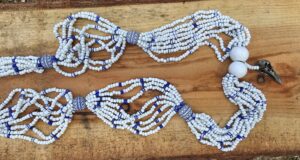
Image credits: “The Ileké of Lemba Odin,” © Rune Hjarnø Rasmussen 2026.


0 Comments