The Life-Giving Forests: Indigenous Peoples, Myths, and Fragments
The narratives and warnings issued by scientists about the high degrees of how and why the human and non-human environment are in a profound state of fragmentation are not convincing enough for the governing bodies of modern and postmodern societies. The academic ecosystem advances discursive practices highlighting social discontinuities as strong processes of deterritorialization and violent transgression. Such discursive products are in tune with cultural patterns identifiable within modern and postmodern civilizing processes still at work nowadays. In reading such societal imageries, various perspectives are used as engaged tools in shaping the common perceptions of ourselves and the ‘other,’ and their worldwide dissemination.
One may identify such a forced existential situation imposed by the modern civilizing processes if one takes into consideration the special case of the world’s uncontacted Indigenous peoples. The term ‘uncontacted’ is a modern invention and it was assigned to specific Indigenous peoples around the world. Such designations affect and distort the perception of diverse Indigenous groups in comparison with other peoples. The uncontacted Indigenous groups prefer to voluntarily avoid contact with the outsiders and to keep their communities and territories for themselves; their rejection of any voluntary contact is both their claim to maintain their sovereignty unbroken and their resilient strategy.
The report Uncontacted Indigenous Peoples: At the Age of Survival, released in 2025 by the human rights organization Survival International shows how/why the outside world disrupts the Indigenous peoples and their worlds. This report was put together to function as an engaged civic discourse, as ‘an overview of the state of the world’s uncontacted Indigenous peoples.’ The report is a connection for different theoretical and experiential claims of knowledge that highlight how the uncontacted peoples are negatively affected. At the core lies their powerful desire to live as they are. The Survival International report independently gathers important information about the state of affairs in which uncontacted peoples are presently caught. Their existential danger is highlighted in detail, it is exemplified by how the Indigenous peoples are trapped within the entangled systems composed by climate change, legal and illegal resource extraction, and other institutional threats; as W. G. Sebald once said: “the deities of the nineteenth century—mining, transport, trade and capital.”
From the 19th century onward, democratic societies have disseminated through normalization discourses, those tacit apparatuses of disciplinary control already at work within a modern re-mythologization process: that human rights are the only ground for individual human beings’ sovereignty. Such norms are considered universal and are supposedly applicable worldwide. However, for uncontacted peoples to live ‘as they choose on their own lands,’ they first need to achieve their own sovereignty of being. For this specific margin of society, a contrapuntal strategy is needed, one in which various human societies can develop a neutral social texture. One which is simultaneously dependent, in respect to those relations or properties that shape our discourses about the other, and independent in respect to the effects of our emergent social relationships. Such an integrated polyphonic global society will manage to dissolve the poisonous racial and colonial stereotypy and neutralize its historical toxic elements.
Geographically, the already identified uncontacted peoples, at least 196 groups, are situated in various parts of the world: 95 % live in Brazil, Peru, Colombia, Bolivia, Venezuela, and Ecuador, and other groups live in the forests of Paraguay, Indonesia, West Papua, and in India’s Andaman and Nicobar Islands. Joshua Hammer has explained that
[o]ften described, misleadingly, as ‘uncontacted Indians,’ these groups, in fact, retreated from major rivers and ventured deeper into the jungle at the height of the South American rubber boom a century ago. They were on the run from massacres, enslavement and infections against which their bodies had no defenses. For the past century, they have lived with an awareness—and fear—of the outside world, anthropologists say, and have made the choice to avoid contact.
Throughout recent history, the modern and postmodern outside world has already molded these groups through social and land pressure. Indigenous peoples hold as shared memories pieces of stories/myths of the rough experiences and undesired encounters with the invasive outside world. That reality is nowadays recuperated as fragmented anthropological research.
Mapping these groups has already been a violation of their concealment. It is a forced reveal of their territory and presence, therefore made open to be conquered, explored, violated, colonized, researched, and, finally, “civilized” (domesticated) and erased.
The most important danger for these Indigenous peoples is the exposure to diseases to which they have no immunity. Secondary to such bio-threats is the constant pressure on their native land, their existential territory. Their constant trouble is to fight an unfair and silent fight, one affected by modalities in which human rights organizations set agendas which act like a boomerang against Indigenous peoples. Consequently, what lies behind the no-contact policy advocated by Survival International, or any other organization, is a constant civic engagement with governmental institutions. Human rights organizations are social bodies that take an encoded basic agenda and function as scanners to identify violation of human rights, to collect data, and to develop legal strategies to stop these violations against all Indigenous peoples. Their struggle is from within those national strategies that ignore the silent minorities in favor of noisy political majorities. Another active function is to unmask the power relationships within present-day outside societies, the planetary hegemon, that negatively affect the Indigenous peoples’ Weltanschauung.
The life-giving forests of Indigenous peoples remain for the outside modern and postmodern human societies a merely constructed myth, often written about as a footnote in economic manuals. One might identify the roots of this myth that sprawls deep in stratified and renewed plateaus like exploration, colonization, slavery, and human trafficking.
I would like to close by wondering what the future of Indigenous peoples might be if they are left alone in their life-giving forests with their myths and their lives. To claim that their assimilation into modern and postmodern societies is a chance to thrive, is just a cruel illusion that conceals their slow unnatural death. And those modern/postmodern deities (mining, transport, trade, and capital) noted by Sebald, will continue to be worshiped throughout the world regardless of the human sacrifices they require and the life-giving erased forests and lands used in their modern mechanized temples.
#
Petru Moldovan is a PhD candidate at the University of Groningen (The Netherlands). His project is dedicated to the closed scholarly ecosystem developed around the Coptic Gospel according to Thomas (Nag Hammadi II,2). His research interests lie within the meta-history of the histories of religions and ideas.
Counterpoint blogs may be reprinted with the following acknowledgement: “This article was published by Counterpoint Navigating Knowledge on 25 May 2026.” The views and opinions expressed on this website, in its publications, and in comments made in response to the site and publications are those of the author(s) and do not necessarily reflect the views and opinions of Counterpoint: Navigating Knowledge, its founders, its staff, or any agent or institution affiliated with it, nor those of the institution(s) with which the author is affiliated. Counterpoint exists to promote vigorous debate within and across knowledge systems and therefore publishes a wide variety of views and opinions in the interests of open conversation and dialogue.
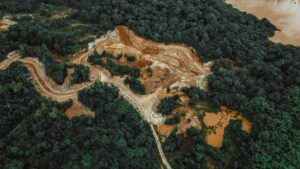
Image credits: Photo by Renaldo Matamoro on Unsplash (free download).

0 Comments